Thursday, November 06, 2014

Crazy Mashup Songs Before Ate Gay Made Them Cooler

If I were a boy... sa puso't diwa, a boy na isinilang sa ating bansa.
(If I Were a Boy/Ako'y Isang Pinoy)

If you're into the witty style of comedy these days, you are probably familiar with those lines from two different songs that are combined together into a funny mashup. And you probably know the infamous Filipino Comedian who's using that signature comic style.


YES, it's Ate Gay, one of the most popular impersonators of the Superstar, Nora Aunor (Ate Guy).

Many are Ate Guy's impersonators but Ate Gay's unique way of making people happy which is by doing her impressive Mashups made her stand out and reached the peak of his career to date. To give you an example, here's one of the six Ate Gay Mashup Compilations in Youtube:


That's Musical Intelligence! To identify two or more different songs and combine them into one is a well-thought skit. However, before Ate Gay made Mashups cooler (on mainstream), there was a TV Show which aired in ABS-CBN in 2006 which used the same comic style. It was in a sketch comedy show entitled QUIZON AVENUE which starred the late Comedy King, Dolphy, with his sons Eric, Epi, and Vandolph Quizon and other comedian guests.
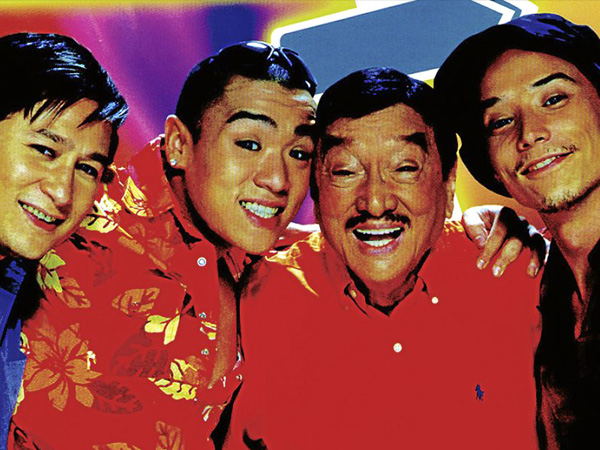
COURTESY OF ABS-CBN CORP COMM

The Comedy Show had a mock musical game show segment entitled NAME THAT TONE where "Mashups" were used as a punchline. There were two contestants who will be guessing a title of a song through obvious song description clues and a couple of notes. But when a contestant seemingly answers a correct song title, the guest singer will sing the right song at the beginning part and will shift to another song that sounds alike or will fit the preceding lines so that the correct song title that will be announced by the host will be a different answer than that of the contestant's.


As a first example, here is Jed Madela's guesting in the show. The songs were You Raise Me Up/Wind Beneath My Wings, Kunin Mo Na Ang Lahat Sa Akin/Dahil Mahal Na Mahal Kita, and I'd Rather/We Are The World:


Another example is Nina's version of Can't We Start Over Again/Come What May, Don't Cha/Don't You (Forget About Me), and Bakit Pa?/Sinong Baliw:


Lastly, here's Wency Cornejo's Mashups for Forevermore/I'll Always Love You, Kung Kailangan Mo Ako/Kailangan Kita, and Ocean Deep/More Than You'll Ever Know:


More Videos: The09HARLEM


Monday, November 03, 2014

Ate Gay's THE DOOR Declamation gets a Halloween Version

Screenshot from The09HARLEM on Youtube

Ever recited a declamation piece before? Well, Philippines' one and only MASH-UP DIVA, Ate Gay, can make every declamation ultimately dramatic with his impersonation of the Philippine Superstar, Ms. Nora Aunor.

What started out as a crazy talent skit in Ms. Gay Competitions from Comedy Bars, Ate Gay's THE DOOR now became a favorite declamation piece by Filipino audiences, most especially children. Every time the comedian performs, whether on comedy bars, malls, concerts, TV shows, or radio, people request for this funny declamation. Ate Gay even said in a radio interview that, although he is somehow flattered when people call him "Ate Guy" (Nora Aunor's Showbiz Nickname), he is surprised when children started calling him "The Door."

The very short declamation is just composed of five lines, usually started with the title repeated thrice. The popular "The Door" lines go like this:


"I touched the door.
I touched again (the door).
I opened the door.
AAAAAAAH!
I closed the door!"
               - THE DOOR.

Because of how remarkable Ate Gay is with this intense interpretation of his self-composed declamation, lots of people even imitated his emotional acting and uploaded "The Door" videos on Youtube. Ate Gay did not expect that the simple skit could also be viral in the internet.

One of the hit Ate Gay videos in social media is The09HARLEM's Halloween Special Presentation of THE DOOR. The trailer-like video was first uploaded in Facebook and ran in about two and a half minutes with video clips from local and international horror movies, including "The Healing," (Hi Vilmanians!) "Dalaw," "The Exorcism of Emily Rose," and "Paranormal Activity." The comedian's performance used in the video came from his guesting in Willie Revillame's Noontime Show, "Wil Time Bigtime."

Ate Gay even shared it on Facebook:


WATCH the Video:


For more videos: Visit The09HARLEM's Youtube Channel HERE and Facebook Page at The09HARLEM - Youtube.

Wednesday, April 16, 2014

Voice of the Youth General Santos supports the GenSan Youth Network


Voice of the Youth General Santos supports the GenSan Youth Network
by Harlem Jude Ferolino


Through the help of the City Population Management Office, several Youth organizations in General Santos City came up with a Mother Network which will unite all young people (individual/organizations) as a venue for local/city development during the Youth Conference, held in April 7, 2014, an event organized for the Gensan Summerfest, the 1st Youth Festival in Soccsksargen. The name “Gensan Youth Network” was first proposed the following day, April 8, 2014, during the 1st meeting attended by 12 youth leaders from different organizations in the city. It was approved at the 2nd meeting held at the CPMO in April 15, 2015, where majority of the 28 participants voted to use the “Gensan Youth Network” as the official name.

Here is the list of the organizations represented by the 28 young people who attended the meeting:
  1. Teen Support Group (TSG) – Mindanao State University-Gensan, MSU-CETD, Dadiangas North High School, Holy Trinity College, Tinagacan National High School, Bula National School of Fisheries

  2. Supreme Student Government (SSG) – A.G. Busano Sr. High School, Dadiangas North High School, Holy Trinity College of G.S.C., Lagao National High Schol (Main), Tinagacan National High School, Irineo Santiago National High School, Bula National High School

  3.   AFS of Sociology Department, MSU-Gensan

  4.    Voice of the Youth General Santos (VOTY Gensan)

  5.   Human Rights Society of MSU (HURISO)

  6.   Junior Chamber International (JCI)

  7.   FEED of MSU-Gensan

  8.   CESO of MSU-Gensan

  9.    YECS of MSU-Gensan


Youth Representatives from different Organizations


Aside from deciding the official name of the network, the guidelines for membership and the Committees on Youth Affairs are also presented. The guidelines stated that members of GYN should be an individual/group within Gensan, 12-30 years old, and must be a resident of General Santos. No membership fee is required, but the organization must submit a CBL or proof of the organization’s existence. The president or a representative from the organization must be present at meetings as an ex-officio. Lastly, the individual or organization must not have a political affiliation.


            The committees for Youth Affairs are the following:
  1. Education

  2. Health

  3. Livelihood

  4. Sports & Recreation

  5. Rights, Welfare, and Participation

  6. Environment

  7. Culture & Religion
Each of the committee has its Ad hocs who presented their proposal of activities that are to be done for the empowerment of the Gensan youth.


With regard to the aim of this Network, Voice of the Youth General Santos, the city’s chapter of Voice of the Youth Network, supports the activities of the Gensan Youth Network, as a medium of informing, inspiring, involving, and empowering the Filipino Youth here in General Santos City. VOTY Network is a growing collaboration of youth organizations in almost 78 provinces in the Philippines and is an internationally recognized premiere youth advocacy group of the country. This year, VOTY Network is the country partner of Global Youth Service Day (GYSD) 2014, recognized by Youth Service America.


As the official youth media partner of the Gensan Youth Network, Voice of the Youth Radio General Santos will help engage thousands of young Generals in meaningful services and activities where their voices are counted, recognizing them as important components in nation building.


Gensan Youth Network, with Voice of the Youth General Santos, will again meet the youth from different organizations on May 1, 2014, 9:00 AM onwards at the STTC Building of Mindanao State University – General Santos City. Together, they will inform, inspire, involve, and empower the Filipino Youth in Gensan!


Voice of the Youth – GenSan conducts its First Orientation and Planning Activity


 By Sarah F. Ubpon

Inform. Inspire. Involve. Empower. That’s what Voice of the Youth Network stands for as its General Santos City chapter held its first orientation and planning last 14th of April 2014 at the AS Mini Theater of the CSSH Building of Mindanao State University. The meeting has been under the supervision of Harlem Jude Ferolino, the president of VOTY Gensan.

The event primarily discussed the advocacies and activities of the growing organization. Furthermore, an encouraging speech from an MSU Alumnus and youth advocate, Mr. Joesam Dequia has given rise to positive reactions on the current issues which affects the youth in every aspect of today’s society. This first acquaintance also became the venue for idea sharing and appointment of committee heads.


The gathering has been a success considering the response that the founding members got from the crowd and the promise of a better and louder voice that this developing youth organization is bound to share.


Friday, March 28, 2014

"POSITIVE lang!"

Kapag may na-aachieve ka, there will always be critics. Mostly, they are those who can't get what they want.. and are insecure of what you have. Gawa ka ng mabuti, anjan sila.. Gawa ka ng kahit konting bagay na medjo off (na parang hindi naman pero pwedeng mamisinterpret), para sa kanila, anlaking issue nun na kelangang ipaalam sa publiko,

'just add spice and you're ready to be served.' 

And they live in negativity forever, spending their 'precious' time on picking up small circumstances in your life na pwedeng scoop para may gawin sila.. at masaya sila nun. :D

Kung may nararating ba ang critics and bashers, yun ang hindi natin nakikita, kasi WALA.
Kung may nararating ba yung taong ginugulo nila, MERON. kasi yun nakikita yun.

Although after the issue nasisira ang image mo, continue what you're doing that you think is fine. Wala silang magagawa jan kapag nagkita kayo at sikat na sikat ka na dahil sa ginawa nila sayo, problema na nila ang matunaw.

Kasi, ikaw ay isang napakalaking "SUCCESS." 
At sila ay isang napakalaking "X."

Wednesday, December 11, 2013

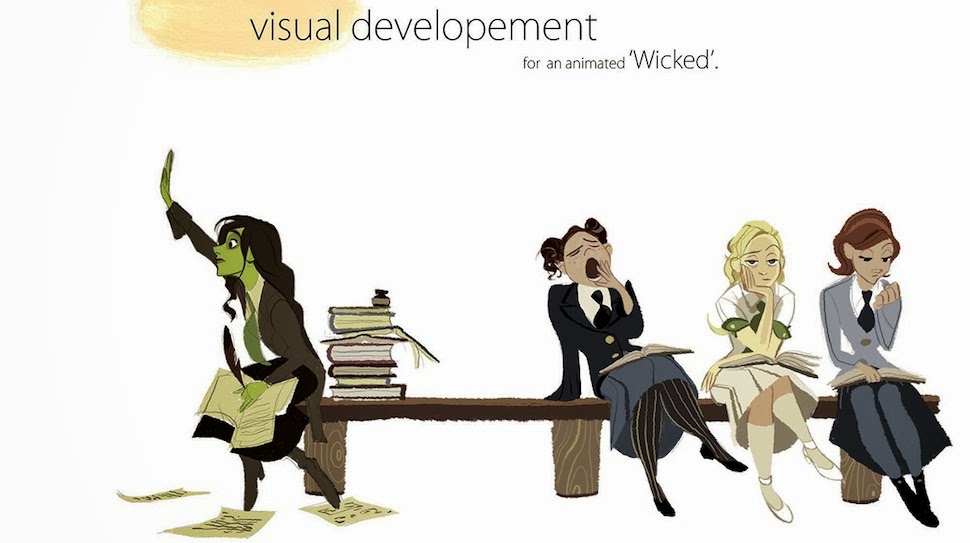
There's gotta be a WICKED Animated Miniseries (or a Full-length Movie-Musical)!

'Who couldn't be happier' than to find something WICKED showing up one day in your curious hours of boredom? Yes, I was surprised when the official facebook page of WICKED THE MUSICAL posted a link to an article about a possible Wicked Animated Film with the cartoon sketches by Disney animator and visual development artist Minkyu Lee (The Princess and the Frog, Adam and Dog, Frozen).

Lee revealed on his Tumblr blog sketches of the characters from Broadway's Hit Musical 'Wicked':


Tuesday, August 13, 2013

“The Woman Who Had Two Navels” (Nick Joaquin) Summary


                The story begins with Connie Escobar, daughter of a politician and a famous beauty, visiting Pepe Monson, a horse doctor, in Hong Kong for a consultation because she has TWO NAVELS. She wanted him to remove her other navel through a surgical operation because if she will be going to give birth, where would the other umbilical cord be connected? In addition, she does not want to become a freak when she has to undress for her husband.  She said she is 30 years old and has just been married hours ago. Then, she told Pepe about a story from her childhood. When she was a child, she thought that everybody has two navels but when she discovered her doll, Minnie, has only one, she threw it into the pond.  Then she told Pepe that her mother is also in Hong Kong. Pepe talked to Senora Concha Vidal and discovered from her that Connie was lying – that she is not 30 years old, only 18; that she was not married a morning just before she came to consult him, but a year ago; that she has only ONE navel. Senora de Vidal also told Pepe that she forced Connie to marry Macho Escobar because Connie was upset about the rumor that her father, Manolo Vidal, spends the public fund to send his children to school. Because Connie was just forced to marry to a man she really does not love, Senora Concha told Pepe that Connie was chasing a bandleader named Paco Texeira, that’s why she is now in Hong Kong. She and Macho followed Connie in Hong Kong they can bring her back to the Philippines. Macho’s reason in taking her back is to avoid humiliation for her politician father by creating a scandal because it is election times in the Philippines. Pepe told Senora de Vidal that Paco is married to Mary and that he and Paco are gradeschool friends. After talking to Senora de Vidal, Pepe went to the Texeira’s.

Cultural Approach on F. Sionil Jose’s “Waywaya”


Waywaya is a short story written by the Filipino writer, F. Sionil Jose. It is originally written in Ilokano, Jose’s native language, and recreates the pre-Hispanic Philippine society (Goodreads, 2013). It is one of the many works of Sionil Jose that was translated into foreign languages, especially English, making Jose the most popular Filipino writer abroad among other Filipino authors -- of course, next to the greatest Filipino writer and patriot, Jose P. Rizal who was martyred in the struggle against Spanish domination (Yabes, 2013). Waywaya, according to F. Sionil Jose, himself, is based on a true story. He explained the story in his regular column, HINDSIGHT, in The Philippine Star (2012):
“Waywaya” is based on a true Papua New Guinea story. Georgina, the wife of the German ethnographer Ulli Beier who headed the Institute of PNG Culture in the early sixties related it. A man kidnapped a woman from an enemy tribe to be his slave but he fell in love with her. When she died, custom demanded that she be returned to her tribe. He did because he truly loved her. As expected, he was killed and eaten by the woman’s relatives.
Waywaya is the Filipino version, specifically Ilokano, of that Papua New Guinea story, with the Ilokano beliefs and traditions and the cultural strain reflected in the short story of Jose. The title itself (Waywaya) is an Ilokano word meaning “freedom” (Jose, 2012).

Philosophical Approach on Hermann Hesse’s “Siddhartha"


Introduction
Siddhartha by Hermann Hesse is a Nobel Prize-winner and Hesse’s most famous and influential work. It is a novel that tells a story of a young man who lives a life in search for enlightenment. On his way in this spiritual quest, he neglects every kind of doctrine because of his distrust on the words that come from teachers. He believes that one can gain wisdom not through teachings but through his own experiences. The basic philosophy therefore that the author tries to portray in his work is that man can attain enlightenment or inner peace through personal learnings from experiences not through listening from the teachings of doctrines. This philosophy was embodied in the person of the novel’s hero, Siddhartha.

Summary
            Siddhartha is a young son of a Brahmin priest but is not contented from the ablutions, the sacrifices, the books, and the Brahmins’ discourses so he went on his own way of spiritual quest together with his friend, Govinda. His goal is to release his soul from suffering. They first went to the forest to become a Samana but Siddhartha realized that they cannot attain Nirvana (salvation of the soul from suffering) through listening only to the Samana teachers because the adviser himself, in his sixties, had still not attained Nirvana. Then they met Gotama Buddha, the Illustrious One, in his garden in Anarthapindika, and were attracted to the magnificence of the Enlightened One. They listen to one of his lectures and Govinda promised his allegiance to the Buddha. Siddhartha, however continued his pilgrimage for his own goal, leaving Govinda to Gotama. Still, Siddhartha considers Gotama as a man who have reached salvation, but he could not gain salvation through his teachings because Gotama himself did not learn from teachings.

A Reading of William Topaz McGonagall’s “The Demon Drink” In the Light of Plato’s “The Republic”


“The Demon Drink” by William Topaz McGonagall


Oh, thou demon Drink, thou fell destroyer;
Thou curse of society, and its greatest annoyer.
What hast thou done to society, let me think?
I answer thou hast caused the most of ills, thou demon Drink. 

Thou causeth the mother to neglect her child,
Also the father to act as he were wild,
So that he neglects his loving wife and family dear,
By spending his earnings foolishly on whisky, rum and beer. 

And after spending his earnings foolishly he beats his wife-
The man that promised to protect her during life-
And so the man would if there was no drink in society,
For seldom a man beats his wife in a state of sobriety. 

And if he does, perhaps he finds his wife fou',
Then that causes, no doubt, a great hullaballo;
When he finds his wife drunk he begins to frown,
And in a fury of passion he knocks her down. 

And in that knock down she fractures her head,
And perhaps the poor wife she is killed dead,
Whereas, if there was no strong drink to be got,
To be killed wouldn't have been the poor wife's lot. 

Then the unfortunate husband is arrested and cast into jail,
And sadly his fate he does bewail;
And he curses the hour that ever was born,
And paces his cell up and down very forlorn. 

And when the day of his trial draws near,
No doubt for the murdering of his wife he drops a tear,
And he exclaims, "Oh, thou demon Drink, through thee I must die,"
And on the scaffold he warns the people from drink to fly, 

Because whenever a father or a mother takes to drink,
Step by step on in crime they do sink,
Until their children loses all affection for them,
And in justice we cannot their children condemn. 

 The man that gets drunk is little else than a fool,
And is in the habit, no doubt, of advocating for Home Rule;
But the best Home Rule for him, as far as I can understand,
Is the abolition of strong drink from the land.

And the men that get drunk in general wants Home Rule;
But such men, I rather think, should keep their heads cool,
And try and learn more sense, I most earnestlty do pray,
And help to get strong drink abolished without delay. 

If drink was abolished how many peaceful homes would there be,
Just, for instance in the beautiful town of Dundee;
then this world would be heaven, whereas it's a hell,
An the people would have more peace in it to dwell 

Alas! strong drink makes men and women fanatics,
And helps to fill our prisons and lunatics;
And if there was no strong drink such cases wouldn't be,
Which would be a very glad sight for all christians to see. 

O admit, a man may be a very good man,
But in my opinion he cannot be a true Christian
As long as he partakes of strong drink,
The more that he may differently think. 

But no matter what he thinks, I say nay,
For by taking it he helps to lead his brither astray,
Whereas, if he didn't drink, he would help to reform society,
And we would soon do away with all inebriety. 

Then, for the sake of society and the Church of God,
Let each one try to abolish it at home and abroad;
Then poverty and crime would decrease and be at a stand,
And Christ's Kingdom would soon be established throughout the land. 

Therefore, brothers and sisters, pause and think,
And try to abolish the foul fiend, Drink.
Let such doctrine be taught in church and school,
That the abolition of strong drink is the only Home Rule.


            William Topaz McGonagall’s “The Demon Drink” (1890) is a poem that discusses the evils of the Demon Drink and teaches that the abolition of this drink would make increase peaceful homes. This demon drink destroys the society and it is proper that the abolition of this strong drink be taught in church and in school. A man and a woman may behave wildly when he or she is drunk and may promote troubles in the family if this foolishness continues. This theme makes the whole poem of William Topaz McGonagall.

In “The Republic” (360 B.C.), Plato presents Socrates setting the requirements of the stories that are to be read to the children in the State. It must teach a lesson and should not contain false accounts on gods and heroes that will corrupt the youth’s minds into believing that gods and heroes perform evil deeds. Some of the rules in “The Republic”, which are the bases for  discussion in this paper, state that evil acts are unholy, that God causes only good things, that lamentations are not for famous men, that temperance must be taught to the youth, and that Simple Narration is a better style than Imitation.